
Server Colocation
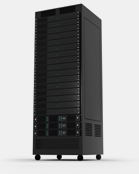 Many people are shifting to what is known as "Colocation Centre" servers. Colocation is largely credited for saving companies large amounts of money, and for opening up servers to small businesses with limited budgets. But what is a colocation centre, and why are so many companies turning to it as an answer to their server needs?
Many people know that it saves money, but why? And what are the risks?
Colo/Colocation - Definition and features
Colocation involves placing the critical parts of the IT infrastructure of several companies in a single location, usually owned by a third party. This means that the company's servers, network and data storage equipment is located in an off-site facility along with that of many other companies, with a single company looking over it. This offers many features over traditional in-house servers, such as:
- Removing the need for in-house servers, and persons to operate them
- Removing the need to purchase new IT equipment on a regular basis, as all upgrades are effectively outsourced
- Reduced cost to have IT infrastructure, as the hardware is found and kept by a corporation which can buy such infrastructure in bulk
- Assured quality of service
- Reduced electricity and connectivity costs, as the costs of powering and connecting the servers is moved to the colocation center, which is placed where such costs are low
- Increased safety and security of the servers
 This abundance of features has made colocation extremely popular among small businesses or businesses which need IT infrastructure to function but do not specialize in anything related to IT. For example a small business which sells office supplies no doubt needs a reliable web site and access to solid internet, e-mail and networking services. But it does not need to employ a staff necessary for upgrading and maintaining servers if it instead contracts their network out to a colocation center, and instead their IT staff can be small and focused purely on the company's software needs.
Large businesses with sensitive or delicate data also tend to use colocation centres. Colocation centres are designed to optimize server health and prevent problems like overheating, fire, or power loss. Air conditioning systems are installed with a special emphasis on keeping the servers nice and cool, as well as keeping the humidity to an absolute minimum. Colocation centres are always equipped with fire prevention and suppression systems, and have the resources to back up a single server many times. They also tend to have small, on-site power stations capable of keeping the servers online even in the event of power loss, ensuring that a company's web site will stay up even if the company's headquarters are without power. These facilities are also home to deep, complex security systems to prevent anyone from physically breaking into the facility and either damaging or stealing data from the servers.
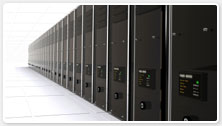 Colocation centres offer huge advantages in terms of cost, reliability and security over traditional in-house servers, and their ability to massively increase a company's IT capabilities makes them very attractive to companies of all sizes. They are located all over the world, and many companies are able to purchase server space at colocation centres located hundreds or thousands of miles from their corporate headquarters. Colocation centres also offer an opportunity for a company with little to no technical knowledge or ability to have access to the latest hardware and software at all times, with little to no downtime.